
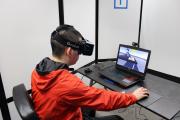
Usable VR and AR: Virtual Reality (VR) and Augmented Reality (AR) are interesting display devices that are becoming practical. We are exploring how to design VR and AR applications that can address application tasks, as well as to develop new mechanisms that will make these displays more useful across a broad range of applications.
Selected Research Themes (current and historic)
This is roughly organized by date, so the more recent (even current) ones are on top.
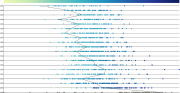
Visualizing Comparisons for Data Science: Data interpretation tasks often involve making comparisons among the data, or can be thought of as comparisons. We are developing better visualization tools for performing comparisons for various data challenges, as well as to developing better methods for inventing new designs.
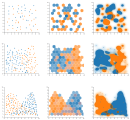
Interacting with Machine Learning: People interact with machine learning systems in many ways: they must build them, debug them, diagnose them, decide to trust them, gain insights on their data from them, etc. We are exploring this in both directions: How do we build machine learning tools into interactive data analysis in order to help people interpret large and complex data? How do we build interaction tools that can help people construct and diagnose machine learning models?
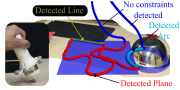
Communicating Physical Interactions: We are working on ways for people and robots to communicate to each other about how objects should be manipulated in the world. Manipulations necessarily involve physical interactions (e.g., forces must be applied correctly). We are exploring ways for people to tell robots how to act with appropriate forces (e.g., to teach manipulation skills) as well as for robots to communicate back to people about the actions they are performing.
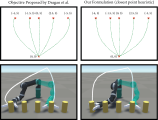
Communicative Robot Motions: If robots are going to work around people, it will be important that people can interpret the robots movements correctly. We are developing ways to make robots move such that people will interpret them correctly. For example, we are considering how to design robot control algorithms such that the resulting movements are understandable, predictable, aesthetically pleasing, and convey a sense of appropriate affect (e.g. confidence).